
MeenakshiSteel Traders
By Teja | May 28, 2026 | 5 min read
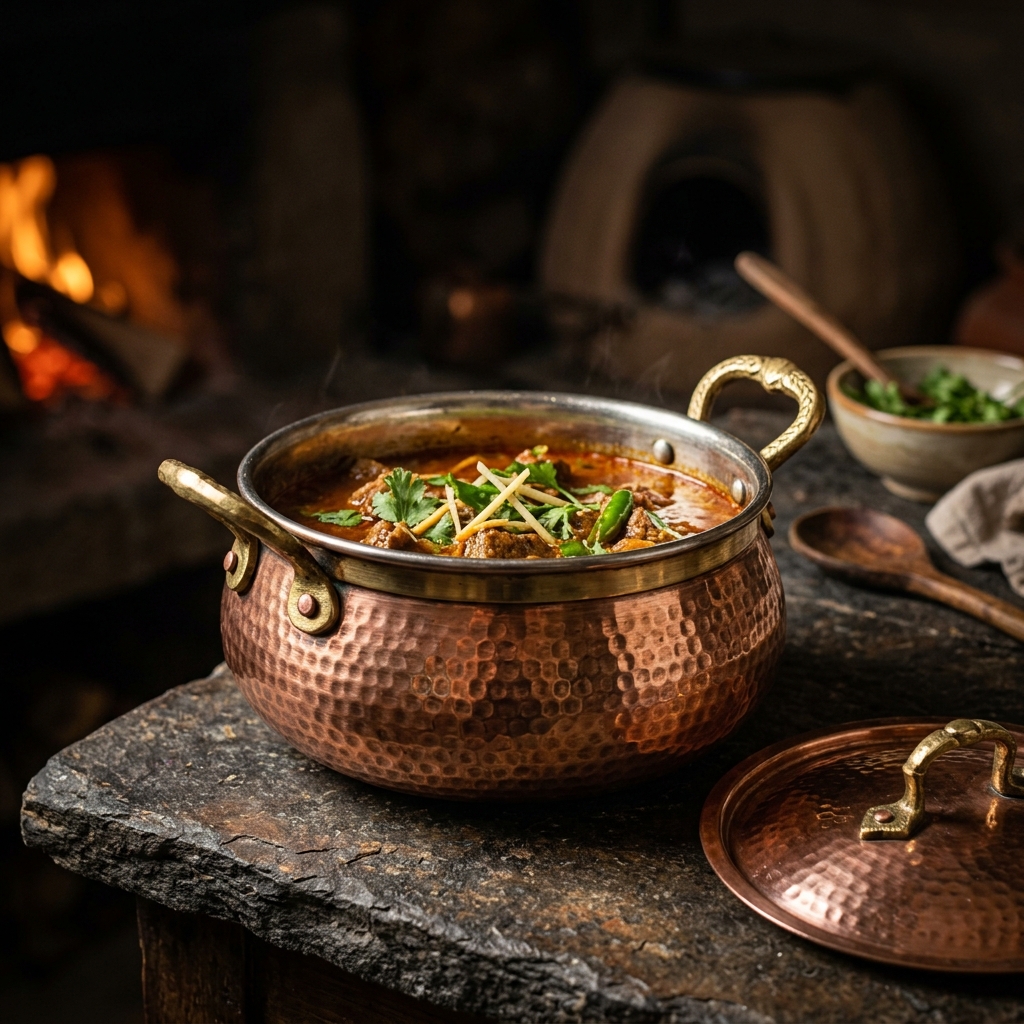
When you browse a collection of high-end, traditional Indian cookware, your eyes are immediately drawn to the stunning, dimpled surfaces of hand-hammered brass, copper, and even stainless steel pots. These beautiful vessels, known as Handis or Degchis, look like works of art fit for a museum. However, this mesmerizing hammered finish is not merely a decorative choice. In the world of metallurgy and culinary science, hand-hammering serves a critical, functional purpose. It is an ancient technique that transforms a simple sheet of metal into a superior cooking vessel with unmatched heat distribution and structural integrity.
To understand the benefits, we must first understand the process. Hand-hammering is an incredibly labor-intensive craft passed down through generations of metalworkers (known as Thatheras in India). A skilled artisan takes a flat sheet of metal or a roughly spun vessel and repeatedly strikes it thousands of times with a specialized mallet over an anvil. Each strike creates a tiny, overlapping indentation. This process is slow, rhythmic, and requires immense precision to ensure the vessel remains perfectly symmetrical.
Metals like pure copper and brass are naturally quite soft and malleable. If you were to make a large cooking pot out of a smooth, thin sheet of copper, it would easily dent, warp under high heat, or lose its shape under the heavy weight of a massive biryani or stew.
When the artisan hammers the metal, they are physically compressing the molecular structure of the material. This process is known in metallurgy as 'work hardening' or 'cold working'. The thousands of hammer strikes compress the metal crystals tightly together, making the vessel incredibly rigid, strong, and resistant to warping, without needing to increase the overall thickness and weight of the pot. A hammered copper pot is exponentially stronger than a smooth copper pot of the exact same weight.
The most profound impact of the hammered surface is on the cooking process itself. A smooth, flat metal surface conducts heat linearly. While copper is already the undisputed king of heat conductivity, a flat surface can still occasionally develop subtle hot spots depending on the flame beneath it.
The dimpled, textured surface of a hammered pot completely changes the thermodynamics. The thousands of tiny facets act like miniature heat diffusers. When the flame hits the bottom of the pot, the heat travels up the sides, but the hammered texture forces the heat waves to bounce and scatter multidirectionally across the irregular surface. This continuous scattering prevents the formation of concentrated hot spots, resulting in a perfectly even, enveloping heat distribution. This is why delicate sauces, slow-cooked Dum Biryanis, and rich milk-based sweets (which are highly prone to scorching) are almost exclusively cooked in heavy, hand-hammered brass or copper vessels in traditional kitchens.
Furthermore, the dimpled surface physically increases the overall surface area of the pot, both on the outside (exposed to the flame) and on the inside (exposed to the food). On the outside, more surface area means the pot can absorb more thermal energy from the fire faster. On the inside, more surface area means more contact points with the food, leading to more efficient heat transfer and slightly faster cooking times compared to a perfectly smooth vessel.
Beyond the undeniable physics, we cannot ignore the aesthetic brilliance of hammered cookware. The dimples catch and reflect light from every angle, making the pot glow warmly in your kitchen. Unlike smooth, mirror-finish stainless steel that highlights every single fingerprint, water spot, or micro-scratch, a hammered surface gracefully hides the signs of daily wear and tear. It ages beautifully, developing a rich patina that tells the story of the meals cooked within it over decades.
In an age of mass-produced, machine-stamped cookware, investing in a hand-hammered piece from Meenakshi Steel Traders is a rejection of the ordinary. It is a purchase that supports ancient artisanal communities while bringing elite, scientifically superior heat distribution into your own kitchen. Whether it is a hammered copper handi for serving or a heavy brass degchi for slow cooking, these vessels prove that sometimes, the oldest, most laborious techniques still produce the absolute best results.